

健康
I thought to write a little about health. After talking to most of my singer friends, I found they didn’t get the same information from their specialists. These are some tips and some ideas I have gathered – my translation of what I’ve heard from numerous doctors and colleagues over the years.
医師の選択
Drugs to avoid when you’re a singer
鼻うがい
GERD – REFLUX
食道裂孔ヘルニア
アレルギー
Women’s particular problems
浮腫
飛行機
旅行の準備
目的地に到着
ホテル
緊急措置
医師の選択
Find an Ear-Nose-and-Throat doctor who has a stroboscope (with video) IN HIS/HER office and uses it on all singers. If you are nervous if “it’s ok to sing or not” and he/she does NOT look at your vocal chords with this contraption (either with the hard metal tube through your mouth, or the teensy fiber-optic one through your nose), then the doctor is not a serious “opera singer” doctor. I have had doctors tell me they “see opera singers all the time” and “they can tell if the chords are swollen without that machine” etc etc. and I have found it patently A BIG FAT EGOTISTICAL LIE. My throat has been totally pristine white (no redness) and yet my chords have been swollen. If it feels hoarse, trust your instinct. But go to someone who has specialised in the singing voice, NOT JUST SOME ENT (Ear/Nose/Throat doctor) WHO’S FRIENDS WITH SOMEONE AT THE OPERA HOUSE OR WHO JUST LOVES OPERA.
One of my favorite ENT’s (Ear /Nose/Throat doctor) – – Dr. Richard Stasney in Houston, Texas, has a website. Check out the advice on the テキサス音声センター 。大のオペラファンである素晴らしい医師からの有益なアドバイスがたくさんあります。
すべての歌手が知っておくべきいくつかのトピックから始めます。これらのトピックの多く (おそらくすべて!) は、 ClassicalSinger.com :
DRUGS TO AVOID WHEN SINGING – AND ALTERNATIVES
– このサイトのボーカル RX パートをチェックしてください
- アスピリン/イブプロフェン、ほとんどの市販の非ステロイド性抗炎症薬は、臍帯の出血を引き起こす可能性があります。代わりに、タイレノールまたは血小板機能を低下させない非ステロイド性抗炎症薬を使用してみてください。市場には少なくとも 2 種類あります (通常、主に関節炎薬として処方箋のみで販売されています。たとえば、Celebrex や Vioxxin など)。
- systemic decongestants – dries out mucous membranes and your throat! Instead try local (spray) decongestants like Afrin, etc. for short periods. (They can be addictive)
- systemic antihistamines – dries out mucous membranes and your throat! Instead try local (Spray) antihistamine
- systemic cortazones – enables you to “walk on a broken leg” on your cords… Makes you more vulnerable to infections. Instead try local (spray) cortisone sprays in your nose to bring down the swelling, and maybe an anti-inflammatory. (Although anti-inflammatory drugs can create other problems. See below)
- strong prescription anti-inflammatory drugs – usually can have 酸の逆流 as a side-effect; as a precaution, always use Gaviscon and even Prilosec (if you have it) in conjunction with these drugs. Ask your throat doctor about it when he prescribes the anti-inflammatory if he doesn’t already give you the precautionary reflux prescriptions. Instead try topical anti-inflammatory drugs (Like simple afrin, which shrinks blood vessels) sprayed in nose and even throat while you’re breathing in, to get them on the cords where they’re needed.
many others coming soon….
あなたにできること:
- STEAM – THE BEST MEDICINE OUT THERE FOR YOUR THROAT AND NOSE! Soothes irritated membranes, and helps facilitate healing.
- nose congestion – spray decongestants
- swelling in the nose from allergies – light corticoid-based inhaler
- particulating drugs in an “aerosol machine” so that antibiotics, cortisone, etc… are inhaled directly into the lungs affected (for a bad chest infection)
- Swollen vocal cords, throat – – arnica tablets under the tongue (at the health food stores – brings down swelling)
- Guaifenisin – Humibid, etc… Can help thin out your mucus. Dr. Stasney says that most people who think they have too much mucus usually have too little, and it’s just too gunky (technical term, there…) MAKE SURE you drink TONS of water (and/or Gatorade) with this, so the medicine has something to hydrate WITH.
- DRINK lots of water. Ever wonder why singers drink so darn much? Just breathing loses so much moisture every day – and we’re singing, releasing lots of hot air out of our body with its moisture attached. It is best to drink all day, and if you feel dry or dehydrated, try a sports drink (without caffeine!) that has salts in it and minerals, to help keep the water in your body. Sometimes drinking TOO MUCH water can just flush your system out, and you don’t retain it in your body. Gatorade and other products like it can help. Stay away from the ones that promise you “energy” or “pep” – they usually have some kind of drying stimulant in them, as well.
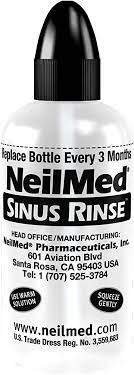
- Wash out your nose with a “Netty pot” (found in whole foods stores, etc…) – lean head to the side, pour warm salt water (with a pinch of non-iodized salt) in one nostril, allowing it to drain out the other nostril; sounds gross, but if you do one “pot” per nostril, it will loosen up “old” mucus in there and help you on your way to recovery from a cold, allergies, etc.
副鼻腔を完全に洗い流すには、風邪のひき始めを避けるため、または組織に水分を補給するために、ベッドの上に仰向けになり、頭を横に垂れ、できるだけ後ろに傾けます。塩水ですすぎ、上部副鼻腔内に 2 ~ 5 分間放置し、その後、再び座って吐き出すか、息を吐き出します。これにより、副鼻腔の上部は乾燥しやすく、立ったまま塩水ですすぐだけでは常に水分補給できないため、多くの細菌が野放しに増殖している副鼻腔の上部に到達するのに役立ちます。
博士による鼻の塩水すすぎのレシピスタスニー
(緩衝化高張食塩水鼻洗浄)
メリット
- この塩水と重曹の混合物で鼻をすすぐと、鼻の垢やその他のゴミが洗い流されます。
- 塩水は腫れた鼻の膜から液体を引き出します。これにより鼻の詰まりが解消され、空気の流れが改善されます。これは呼吸を楽にするだけでなく、副鼻腔の通路を開くのにも役立ちます。
研究によると、この濃塩水と重曹(重炭酸塩)の混合物は、鼻の働きを良くし、鼻水を早く排出するのに役立ちます。
レシピ:
- 1クォートのガラス瓶を注意深く洗い、すすいでください。清潔な瓶に蒸留水を入れます。
- Add 2 or 3 heaping teaspoons of “pickling/canning” salt. しないでください 不要な添加物が含まれる食卓塩や海塩を使用しないでください。ピクルス/缶詰の塩は食料品店で購入できます。
- 小さじ1杯の重曹(純粋な重炭酸塩)を加えます。
- 使用前にかき混ぜたり振ったりしてください。室温で保管してください。 1週間後、残った混合物を注ぎ出し、瓶を食器洗い機に通して新しいレシピを作ります。
- If the mixture seems too strong, use less salt – – try 1 1/2 to 2 teaspoons of salt. For children it is best to start with a weaker salt solution. Then gradually increase to using 2 to 3 heaping teaspoons of salt, or whatever the child will accept. Warm in microwave to body temperature for nose wash – take a few seconds only. make sure it is not too hot!Adapted from a treatise on “Chronic Sinusitis” by David S. Parsons in The Otolaryngologic Clinics of North America; vol. 29. #1. Feb. 1996 and modified by C. Richard Stasney, M.D.
ビタミンCの摂取についての重要な言葉:
Although some people advocate taking enormous amounts of Vitamin C per day for longevity, staving off a cold, etc… Please use with caution, as use of more than 1000mg per day can affect muscle coordination (in your throat, especially.) The gist of the matter is that it affects the firing of the nerves if you take more than 1000mg per day – so muscle coordination is not at its optimal if you have taken more than 1000mg. If you’re going to use more than 1000mg per day, you should not do it on a day you are performing. If you’re on a day off and feel a cold coming on, be my guest to tank up on Vitamin C. Beware that it can have gastric repercussions, as well. If you get diarrhea, then you have taken too much ascorbic acid. I advise Zinc lozenges, as well, as these seem to have a big effect on getting rid of colds more quickly. Never take Zinc or vitamin C on an empty stomach. They can upset your stomach and make you feel nauseous by themselves. Beware of the ZINC FARTS, too – they can be especially lethal. 🙂
ACID REFLUX, GERD (GASTRO-ENTESTINAL-REFLUX-DISEASE), HIATIAL HERNIA AND THE REFLUX–ALLERGY CONNECTION
私が知っているほとんどのプロの歌手は、胃酸逆流やアレルギーの問題を抱えています。この 2 つの関係と、それに対して何をすべきかを読んでください。
酸逆流とは何ですか?
Acid Reflux happens when the stomach either makes too much acid, and it seeps up the aesophagus, and/or the valve at the top of the stomach does not close as it should and allows stomach acid to flow back up the aesophagus, washing stomach acid up over the back of the throat and around the vocal cords. Eating certain foods (read below) seems to open up that valve and allow the acid to backwash up. Dr. Stasney is convinced many singers have reflux problems AS THEY’RE SINGING, not necessarily while they sleep or are reclining. I tend to agree with him. Symptoms: burping up stuff, hoarseness, feeling of a lump in the throat in the morning or when you swallow, a dry cough, dryness of the throat (in the evening and morning especially), bad taste in mouth, and redness and swelling of the chords. and heartburn. Most doctors won’t think it’s that big of a deal, because it’s just a little gas! But it is a big deal for your throat, and usually should preclude singing on it for at least 48 hours. (This is my experience, coupled with a few friends’ experiences: you could be the miraculous one who heals more quickly, but I doubt it.) It can be light or intermittent reflux and still have huge repercussions on a singing voice. You could only have one or two of the symptoms but still have reflux. I am also convinced that there does not have to be actual ACID liquid flowing up, but that the gas from burping can contain enough acid to damage your throat. After all, this is the acid that digests your steak dinner – why shouldn’t it digest your throat, too, if it comes into contact with it?
熱い食べ物、スパイシーな食べ物、油っこい食べ物によって悪化する傾向があり、横になっていると声帯を超えて上方に移動しやすくなります。 (当然です!) したがって、横になる前に胃酸をできるだけ少なくしておくと効果的です。就寝中に上半身を高く保つことも効果的です。
HISTAMINE’S ROLE IN ACID (OVER-)PRODUCTION:
The body sometimes uses one substance for two different purposes. Histamine is what your body puts out when you have an allergic reaction (- thus, anti-histamines calm down the effects of histamine.) Your stomach’s cue to release acid for digestion is also the release of histamine into your system. It needs a very small amount – micrograms – of histamine to be released in order to make enough stomach acid to digest your food. BUT when you are having an allergic reaction, you are releasing MILLIGRAMS into your system (so no wonder people with allergies can have big problems with Acid Reflux.) Proton-pump inhibitors like Nexium and Prilosec (Losec) inhibit the release of histamine into your body. Antacids such as Zantac, and non-prescription Maalox and Gaviscon neutralise the acid that’s already in the stomach.
胃酸逆流の疑いがある場合に従うべき良いルール:
- スパイシーで脂っこい食べ物、炭酸飲料、柑橘類の食べ物や飲み物、アルコール、チョコレート、ピーマン、ブロッコリー、生野菜、カフェインは避けてください(これには非ハーブティーも含まれます!)。
- Do not eat 2-3 hours before going to bed or lying down, so you will have digested and won’t have more stomach acid in your stomach.
- Elevate the entire head of your bed – put phone books under the legs of the top of the bed. (Don’t just use lots of pillows, as that only cranes your HEAD, not your entire upper body, and doesn’t really help that much.)
- 胃に残っている可能性のある酸を中和するために、寝る前にガビスコンを摂取してください。
- INSTEAD – eat whole foods, grilled veggies, baked meats, al dente cooked veggies, DRINK herbal teas (verbena, camomille, etc,) still water, Sprite or 7Up if you really need a carbonated beverage.
- Many stomach doctors will not say that you have reflux, because they are not looking for the subtle vocal changes that even the lightest reflux can cause. They are looking for bleeding in your esophagus, etc… and other violent signs. Some people have reflux even without feeling heartburn or even noticing that they are burping up acid. For some singers, even the vapors of acid gas can affect their voices. IF you have two or more symptoms of Acid Reflux, especially dryness in the morning and unexplained hoarseness, ask your THROAT SPECIALIST if you should try something against reflux. You can try over-the-counter remedies and behavioral (and eating) modification and see if it makes a difference.
- With Acid Reflux, there is a telltale pinkness or redness around one end of the chords (the side where esophagus is closest to pharynx). Your throat doctor should know this. If he doesn’t know about it, change throat doctors. If your doctor tells you that you definitely have Acid Reflux, treat it AGGRESSIVELY already from the beginning. Do not “try out” any lesser drugs to see if you can get by with them. Stomach acid is what digests your food, and the longer you wait to treat it aggressively, the longer it is digesting your vocal cords and sinuses. Take a proton-pump inhibitor such as Prilosec or Losec (omeprazole 40mg) or ネキシウム (esomeprazole magnesium 40mg) or Prevacid once a day, plus an antacid like Gaviscon before bedtime. . Actually Nexium gave me diarrhea, so I wouldn’t personally recommend it. It is the active part of the ingredient in Losec, extra strength. I might add that the most important thing is staying on a very aggressive treatment (strong enough dosage, and sticking to eating rules) for a LONG enough period (4-6 months!) If you quit too early, once symptoms seem to have disappeared, you risk that your digestive system is not totally healed and the condition can creep back. Also, some friends recommend not going off of a proton-pump inhibitor “cold turkey” – to gradually diminish your dosage as you’re finishing off your therapy. It make sense – your body hasn’t made this stuff (histamine, acid) in a long while; it may need to be “weaned” off the medicine so it doesn’t start acid production with a vengeance the minute you’ve quit the therapy.
裂孔ヘルニア
Also involved with your Acid Reflux could be a hiatial hernia. Your diaphragm is bisected by your aesophagus, which goes through the middle like a tube through a tight hole. Sometimes, the “hole” around the aesophagus gets “stretched out,” to put it in layman’s terms, and when the diaphragm goes down, it presses the stomach up through the gap now around the tube… To use a very scientific term, this squishes the stomach’s contents back up the aesophagus and backwashes acid into the throat. Singers tend to be prone to this, as we are overextending our diaphragms all the time with singing. There are also certain diets that can exacerbate a hiatial hernia. However, most stomach doctors will not think there is a problem unless there is a GROSS problem of tons of acid washing up on your chords, and the hernia is obvious, and heartburn is extremely painful. You can have hiatial hernia (and reflux, for that matter) without having heartburn. There used to be simple drugs to take for a hiatial hernia, to close up the space, also drugs to help “tighten” the valves at the top of the aesophagus. I don’t know if they’re still available, as they found they had side effects. I thought it worked very well for mine, years ago, and didn’t have any side effects. (yet?) In more extreme cases, a small surgery can be done to fix the problem.
場合によっては、胃酸逆流が原因であると考えられる説明不能な問題がそうではない場合があります。ホルモンの変化や不均衡に関連して、乾燥や嗄れ声、索の浮腫が発生することがあります(妊娠、ピル、ホルモンの不均衡、甲状腺の問題、生活の変化などが原因です。) 積極的な逆流治療を数か月行っても効果がない場合、問題の他の原因を調べてください。
アレルギーと胃酸逆流の悪循環:
Singers take in more air than “normal” people when we sing, in dusty, moldy old buildings most of the time. So we end up breathing in more air, and thus, more pollutants and allergens than others. And we lose more moisture from singing all the time. And we notice the effects that allergens and pollutants have on our voice, whereas most average people do not. Singers may not necessarily be more prone to allergies (although I think they do because of my “more air theory,” but you can agree or not – it’s just an idea, not proven…) but we do notice it more! Combine with allergies, the effects that a histamine reaction has on your stomach and its overproduction of acid: it will make even more acid, wash up even more over the cords and sinuses, thus creating even more irritation, which then creates more histamine… What a vicious circle! Cut the circle by treating Acid Reflux with an aggressive treatment of behavior modification (when you eat and what you eat) and drugs (proton-pump inhibitors and antacids). And maybe even find an antihistamine that works for you without drying you out too much. My favorite throat doctor recommends a sinus spray called “NASONEX” (mometasone furoate monohydrate) Nasal Spray, 50 µg, to keep irritation down in my nose, to try and stem the vicious circle. Or take a Clarityn in the evening before bed, if that doesn’t dry you out too much. Or use NasoChrome sinus spray. Steam with a warm vaporiser (a cheapo 15$ at Walgreen’s) and if you even suspect acid to be a problem, glug a bit of Gaviscon before going to sleep. If acid is a problem, at least that way, some of it will be neutralised.
チェックアウト Rachel Cobb’s Acid Reflux Page.
コードの腫れ!
臨床的には 浮腫臍帯が必ずしも赤くならないのに、臍帯が腫れていることをどうやって知ることができるのでしょうか?
Your vocal cords can be swollen, full of water (much like a blister on your heel when you’ve walked in shoes that are too tight for too long) and YET not be red. Most doctors will look down in your throat and say “you’re fine to sing, your cords are not even pink.” This is misleading, as the pink may have gone away, or your cords could be swollen with water because of hormonal changes, etc.. without ever having been red. If you feel hoarse, the voice does not warm up no matter how long and how slowly you warm it up, you have a big break in your voice when you slide down supporting, you feel a lump in your throat or like you need to clear your throat all the time (this could also be due to Acid Reflux) and you have air escaping in your voice that is not normally there, you may have swelling on your cords. It is usually in the same place about a third of the way up the cords, on both sides. This could be called a PRE-NODE, or a SOFT NODE. Very scary words, and most singers think their careers are over. They are not, but care must be taken to let the swelling go down, and to get to the root of the problem that has caused it so it doesn’t happen again. Most of the time, it is from too heavy a schedule, and it was caused by singing while sick.
I also find swelling to be a big problem for me after air travel. I’m trying more and more to have at least one to two days of rest in my destination before having to sing. ESPECIALLY trans-Atlantically. My new rule is that if the flight is over 3 hours, I have to wait two days until I sing. And I try to SHUT UP talking when I get there, as speaking is the hardest thing on my voice.
When we’re sick, the right kind of mucus is not protecting our throats, and we are more prone to injury. Sometimes oedema is not visible, however, with a normal laryngyscope, but only when the doctor makes a film of your cords while you’re singing with a strobe light to slow down the beats of the cords recorded on the video. Sliding slowly down a fifth in a few places in your range should give the doctor enough to see. If the chords, instead of “kissing” each other symetrically, “dance” with each other (i.e. not meeting up but moving autonomously on each side), there is water in the cords. Sometimes a soft node or swelling is only seen on a sliding scale because it is on a part of the cord that is not easily visible on one note, but will show up when you slide. Strange but true.
The best remedy for oedema is VOCAL REST and small vocal therapy exercises. This means absolutely no singing and very minimal talking, if any. NO whispering, as that’s worse for the voice than talking. No laughing, as that is so percussive on your cords. I know this is a toughie. Crying ain’t too great either.I know lots of professional singers who have had this problem, usually for reasons above, not necessarily because they were singing ill-suited repertoire or that their technique was bad. Because they dreaded that phrase “Janey’s having VOCAL PROBLEMS,” they did not tell people that they had oedema. Nobody forgets how to sing overnight, but oedema can make you feel like you no longer have vocal technique all of a sudden!
You can mess up your voice overnight if you’re sick, are singing on a cold or on reflux, or are singing too much, no matter how well you sing. There should be no stigma, but for some reason there is the implication that they don’t have a good technique if a singer has oedema. It can even be caused by hormonal changes (especially in women), so I don’t see why there is this stigma attached. It should be as valid and innocuous a reason not to sing as a cold or the flu, but since you don’t end up with a red nose and outward signs, I guess it seems suspect. It should not. Nobody tells a runner or a tennis player they have bad technique if they pull a muscle while running: it is an injury. However, if you let it go, and do not address the problem head-on with vocal rest and therapy… I would say it is your own fault!
浮腫のためのエクササイズ:
浮腫の主なものは、おそらく 水分補給. Vocal cords, if they lack the requisite protection on their outer layer, will send out messages to produce very thick mucous to try and protect themselves – – and if that doesn’t work, they will send out for water (swelling) to protect the area. Many times, the body’s overreaction is what messes up all our plans. If we had just hydrated and/or listened to our body’s needs, perhaps our body wouldn’t have overreacted. So first, drink hydrating drinks (not caffeinated or alcoholic). Then, breathe in steam, if you can. Steaming works wonders!! THEN, do these forced-hydration exercises.
- ガーゼを用意しましょう
- ガーゼをきれいな水の入ったコップに入れ、水を絞ります。
- ガーゼを口と鼻に当てて、水分補給を3回深く吸い込みます。
- “Massage” the hydration into you cords by: Using a half-full glass or bottle of water, put a straw (optimally, a straw 1cm diameter and 30cm long) in about 3cm in the water and do the following two exercises, one each after the 3x hydration breaths:
- 水に泡を吹き、同じ息で、ゆっくりと無理をせずに、自分の音域の真ん中あたりで中くらいの柔らかい音を歌い、非常に穏やかなメッサ・ディ・ヴォーチェ(徐々に声を大きくして mf まで行き、それ以上は出さず、無理をせずにできる限りフェードアウトする)を行い、最後に泡だけで歌います。
- blow bubbles in the water, then in the same breath slide down a fifth, in an easy part of your voice without strain…
- After doing Number 3 (gauze hydration breathing in 3 times) – “Massage” the hydration into your cords by doing either of these following exercises:
- doing a “vocal fry” inhale
- slide down to a “vocal fry” from each vowel (a, e, i, o, u) in the middle of your range – Such as “ah” in middle of range followed in the same breath with an “ah” in vocal fry, then “e” in middle range followed by “e” vocal fry, etc…
業界のヒント: 嗄声の緊急時の対処法
from water or swelling on/around cords – when you have a cold and know that you just have to sing and that swelling is the direct culprit for your hoarseness: Use the decongestant “AFRIN 12-hour decongestant” in the burghundy box – not any other brand or with any other additives. Inhale while spraying it in your MOUTH, trying to get it on your cords (if it makes you cough a little, you’re doing it right). This will bring down swelling temporarily, but you will need to see a doctor and SHUT UP after the concert. The stuff tastes horrible, by the way.
If you have a very important engagement and there is no way to cancel – you must sing, and hopefully you have some time afterwards to recover: you can use メトプレドゾン. You should discuss the repercussions with your doctor. It is a prescription medicine and needs to be used sparingly in your entire career (if at all) and with much caution. Steroids like this will take down swelling, but can open you up to injury (like running on a broken leg), open you up to infection, and slow down the actual healing process your vocal chords need. If the swelling is not just from a too-busy schedule or an illness, and is instead from incorrect singing, you are risking a lot by singing on steroids. This steroid, taken orally 30 minutes before you need to sing, can temporarily bring down swelling. HOWEVER, I can not recommend its continued use, nor would I really recommend using it at all, unless it is really dire straights and you have to sing. You can not sustain a career and good singing if you need steroids in order to keep your schedule. I would not recommend using this for the OPENING of a run of shows, as I think you need lots of quiet time after having used steroids to let your body heal itself properly. In using steroids, you’ve slowed down that process in some ways. I have used it a few times in my career in my over-30-year career, when I could not get swelling down any other way, and needed to sing. Almost every professional singer I know has used it at least once. But all my friends also have a healthy wariness of using it, and used it only when they had no other choice but canceling, and were super careful afterwards.
長時間の飛行機移動
Long plane rides (and sometimes even short ones) can have detrimental effects on the voice. The plane is an environment drier than a desert, so adding humidity to your throat and sinuses is a must. The plane can also be a great breeding ground for bacteria and virus – – you are stuck in a box with many people for hours… If you are seated next to a sniffing, coughing person, ask them if they’re sick or coming down with a cold (it could be their allergies), and then ask to be moved! WEAR A MASK. This is the best thing that has come from the stupid Pandemic – the ability to wear a mask and not seem like a total crazy person.
You are not being rude – you can not afford to be sick once you get to your destination. A cold has a gestation period of about 10 days, so you may be fine once you get there, but come down with a nasty bug your second week of rehearsals. I have also always been a big goober and bring a hospital mask with me on long flights. I also bring spray salt water (Sterimar in Europe – great stuff) and mist my face, nasal cavity and the inside of the mask with it periodically (about once an hour) , and wear it to keep the humidity in. There is also a thing called the 加湿器 that some of my colleagues rave about, but I can’t vouch for it, having never used it. It’s worth a try.

I also drink at least one small bottle of water every hour, to try and hydrate from the inside out. Do NOT drink alcohol or any kind of caffeinated drinks (this includes tea and even green tea). They actually suck the water out of your system. Carbonated drinks do not hydrate well, so avoid them, too. Avoid milk products, as they tend to thicken mucus membranes. Water, water, gatorade, HERBAL teas (ask for Camomille tea – they usually have it.) Try to get up every now and then and walk around to keep your circulation going, or do exercises in your seat.
The plane’s pressurized cabin also has detrimental effects on your soft tissues – it makes them swell (guess what your cords are – soft tissue). AND the air quality is oxygen-poor because of the altitude and re-circulation, so get as much fresh air as possible once you get to your destination. I’ve had good results with an “air-ionizer,” one of those snazzy gadgets from Sharper Image. I find that I feel more refreshed after a flight wearing one, but maybe it’s psychological. I always bring it on long-haul flights. I also goop up my face with moisturizer on a flight, and put vaseline or chapstick on my cuticles, nails and the base of my nose. Those are body parts that seem to really dry out on the plane. Boy, am I a fun passenger to watch! Who cares if they think you’re a total weirdo? And I usually keep my blanket over my entire seat and head and just try to sleep and to keep moisture in the air I breathe. I’m a real fun row-mate to have, obviously. But who cares? My main objective is to be in good shape when I get there. I also do some of those little isometric exercises in my seat to keep my blood moving. Heck, after all that, who has time to get bored on a long flight? I am also the big geek on the plane who wears a surgical mask.
Most of all, DO NOT TALK on a flight – tell the enthusiastic, nosey lady next to you that you’re a plumber or something, so you don’t have to tell her ALLLLL about your “Fascinating Career!” ARGH. Talking in that loud and dry of an environment is horrible for your voice.
出発前に
- いくらか得る “NO JET-LAG ,” these magical herbal pills that you will chew once an hour on a flight that immensely help reduce swelling and get your clock back in order once you’re there.
- Set your watch for the NEW timezone when you get on the plane, and stick to the NEW schedule. i.e. if it is 2a.m. at your destination, SLEEP with your eyes covered until it is a decent hour to get up. Resist eating airplane food on their timetable (which is always the timetable of where you come from, not the destination.) It’s not that great, anyway. When it’s daytime at your destination, open the shade, and get light in your eyes… Get a bit of sun on your arms and the backs of your knees, as well.
そこに着いたら
飛行機での移動による腫れのため、到着した日も到着した翌日も歌わないことをお勧めします。腫れた声帯で早すぎる歌を歌うと、1週間遅れてしまう可能性があります。
時差ぼけ!
Jet lag is when your inner body clock doesn’t understand what time it is. You need to get it on the right schedule. If you arrive in the morning, go out during the day and get some sun – in the places you have receptors exactly for your clock – – in your eyes, on the back of your knees (yup!), and get some exercise. Try valiantly to stay awake at least until the sun goes down, and then DO NOT get up when you wake up at 5 a.m. the next morning – stay in bed with the lights off and tough it out until at least 7 a.m. If you get there in the evening, it’s easier – eat a light meal and go to bed. If you have trouble sleeping, I bring along Melatonin, which I buy in the U.S. It is the substance your body starts to make in the absence of light to tell your body to go to sleep. Take one small tablet at sundown. And then stay out of the LIGHT! Act like Dracula or something…
ホテルの客室で
Hotel rooms are notoriously DRY. You can usually buy a cheapie humidifier at a drugstore, if you’re going to be there very long, or you can leave wet towels hanging over the gas radiator to add some humidity in the room. (Don’t leave them there all day – could start a fire!) I usually run myself a bath by stopping up the tub, turning on the SHOWER with only hot water to steam up the place, then add cold water to the mix out of the regular spicket. Soaking in a tub is also great for you to recapture some moisture after a long flight – your largest organ is the skin, after all. Moisturize afterwards to keep in the moisture!
女性
IVF – TAKING HORMONES TO HAVE A BABY – I can not stress enough the huge and mostly irreperable damage to your cords that can be caused by the flood of hormones required by most clinics to do in-vitro fertilization. Hormones can totally change the structure of your vocal apparatus. (Think men that have had sex change operations!) I don’t know any singers who have done these rounds of hormones who have not had problems with their voices as a result. Please think about your priorities, and know that you could lose your voice in order to have a baby with this method. If it is that important, then of course, do it (although I think there must be other repercussions on your overall health as a result of this flood of hormones that doctors have not fully addressed in their rush to fulfill a wish that is very lucrative for them.) If singing is also important for you, or your only livelihood, think about adopting! Some foreign countries have more streamlined and simplified adoption procedures than the U.S. and maybe shorter waiting periods – adopting there can have its benefits, and there are certainly many needy children who need loving homes.
とはいえ、体外受精をすることに決めた場合は、 ダウンレギュレーションを回避できるかどうか確認してください。! They act like it’s a necessary part of the therapy, but it is NOT. The nice term “down-regulation” means they give you hormones that put you into a fake menopause by taking away all your estrogen for a month. Besides having hot flashes, etc. and other menopausal symptoms, it can screw up your vocal cords forever. Yes, change the structure of your vocal cords. Estrogen is one hormone that keeps your soft tissue lubricated. (Throat, what are you made of? Soft tissue.) Estrogen is also what gives your cords the elasticity to stretch up to high notes. Take that away, and what do you get? Other hormones in your body which can thicken your cords while you have no estrogen. And leave them thickened.
I tell you this from my own personal experience. I had two perfect kids finally at 48 and 50 after years of IVF, and I DID NOT DOWN-REGULATE! Doctors want you to do it because it’s “best practice,” they can put ALL their patients on the same cycle, and it gives them a better database for their results if all their patients are doing the exact same protocol. But, cluephone here, what’s good for one person may not be what’s best for you. !!!! I finally found doctors that thought about my singular case and needs, and found the right protocol for my needs. And now I have two beautiful children. Woohoo. I still felt some hormonal fluctuations during IVF, but definitely nothing near what could’ve happened to me if I had down-regulated.
ホルモン
(i.e. the pill) – Ask your THROAT doctor what effects it can have on your voice, not your gynecologist, who will say “of course not” because he/she doesn’t sing. I DO believe they can have adverse effects on the singing voice. Try to take the lowest dosage possible without “bleed-through” and avoid the mini-pills that only have progesterone. Pills with synthetic progesterone can cause darkening in the voice – – it metabolises down to a testosterone analogue in your body. Instead try barrier methods and/or IUD together with rhythm to be extra sure. Meanwhile, OPERAMOM.COMをご覧ください Advice most of all – for (prospective) singer moms but also some advice for singers trying to avoid pregnancy. There are some lovely groups on Facebook that other singers may be involved in that can be helpful. Seek them out, ask your friends, and join up. Finding people who have been in your same shoes and seeing what solutions they have come up with can be very helpful and reassuring. I think people are becoming more open to being realistic about our lives and helpful to others. It’s nice when we realize we’re all in this together and help one another out!
免責事項: このサイトのすべての情報は、医師業に携わる専門家ではない私が提供しています。これらは家庭療法です。Laura Claycomb は、このサイトから得たアドバイスによる損害や法的責任については一切責任を負いません。喉や鼻に深刻な問題がある場合は、医療専門家にご相談ください。
 日本語
日本語  English
  Italiano
  Français
  Español
  Deutsch
  简体中文
简体中文  Русский
  한국어
한국어  עִבְרִית